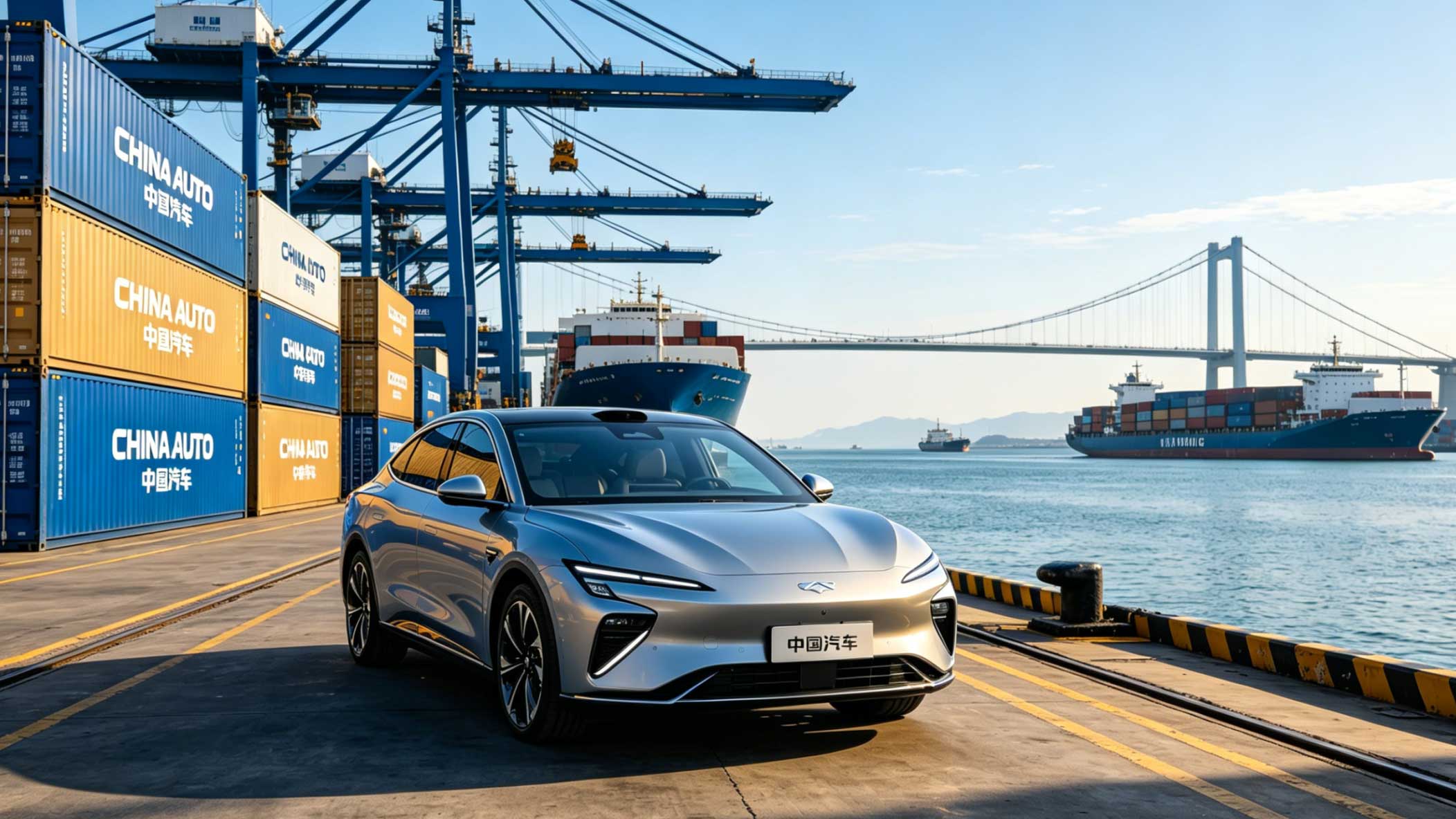
China's auto exports are undergoing a strategic transformation from "product export" to "ecosystem overseas expansion". This shift is not a passive response to international trade barriers and market fluctuations, but an active choice for China's auto industry to upgrade and move toward becoming an auto power, marking that China's auto globalization has entered a new stage of deepening local markets and building collaborative development across the entire industrial chain.
China's auto export volume has ranked first in the world for three consecutive years. In 2025, it exceeded 7 million units for the first time; in the first quarter of 2026, export momentum remained strong, with a total volume of 2.226 million units, a year-on-year increase of 56.7%. Among these, new energy vehicle exports reached 954,000 units, a year-on-year surge of 120%, making them the core driver of export growth.
However, the traditional model relying solely on complete vehicle exports is facing multiple severe challenges:
Mounting external pressure: Trade protectionism is on the rise, with some countries and regions imposing high tariff barriers. Maritime logistics costs remain high and fraught with uncertainties, while industrial policies in traditional advantageous markets are constantly tightening, further squeezing export space.
Growing internal pressure on growth: Competition in the domestic auto market is becoming increasingly fierce, the industry's overall profit margin is declining, and market growth space is gradually reaching its limit. Going overseas has therefore become a key path for Chinese auto enterprises to break through development bottlenecks and seek new growth momentum.
Against this backdrop, a consensus has emerged in the industry: going overseas is no longer a supplementary growth driver, but an inevitable path to break the "involution" in the domestic market and achieve sustainable development for enterprises.
"Ecosystem overseas expansion" goes beyond simple product trade, emphasizing systematicness, localization, and collaboration. Its core connotation is reflected in three key dimensions:
First, in-depth localization of the industrial chain. Chinese auto enterprises are no longer content with merely exporting complete vehicles; instead, they are accelerating the layout of production bases and the cultivation of local supply chain systems overseas. By creating local jobs and driving local industrial upgrading, they achieve symbiotic and mutually beneficial development with the social economy of host countries.
Second, collaborative output of the entire value chain. The overseas strategy has shifted from individual enterprise efforts to collaborative industrial chain expansion. Chinese auto enterprises need to systematically export R&D, manufacturing, sales, after-sales service, and even standard systems, avoiding new "price war" internal friction among Chinese brands in overseas markets and building core competitiveness through upstream and downstream collaboration.
Third, integration and empowerment of hard and soft power. Successful overseas expansion relies not only on product strength as "hard power", but also on integrating into local laws, policies, cultural customs, and consumption habits to build a solid foundation of "soft power". Meanwhile, technology export has become a new competitive barrier. Core technological advantages, represented by "three-electric systems", intelligent cockpits, and high-level autonomous driving, are helping Chinese auto brands move from a "cost-performance advantage" to a "technological premium".
Currently, Chinese auto enterprises are moving beyond a single overseas expansion model and exploring diversified practical approaches to adapt to the unique demand characteristics of different markets:
First, steady and in-depth localization. Enterprises such as Changan Automobile adhere to the philosophy of "no base, no overseas", emphasizing that overseas factory construction is not a simple transfer of production capacity, but a strategic layout to deeply integrate into the local industrial ecosystem and adapt to local market demands, achieving full-chain localization of R&D, manufacturing, and sales.
Second, light-asset operation through resource leveraging. Some enterprises use the global sales networks and channel resources of multinational companies to promote China-developed models worldwide; others reduce market access thresholds through technical cooperation and co-production, quickly entering target markets and achieving efficient overseas expansion with light assets.
Third, systematic promotion at the national strategic level. Faced with increasingly fierce global auto industry competition, it is necessary to strengthen international policy coordination, promote the alignment of Chinese and foreign standards, and build compliance systems at the national strategic level. This includes actively participating in global new energy vehicle governance and promoting the global adoption of China's auto technologies, standards, and rules to support enterprises' overseas expansion.